
Women often focus on visible strength, weight, or endurance. Pelvic floor muscles rarely get the same attention. This is a mistake. These muscles play a major role in bladder control, sexual health, posture, and long-term independence. Ignoring them leads to problems many women accept as normal, even though they are not.
What are pelvic floor muscles
The pelvic floor is a group of muscles at the base of the pelvis. They support the bladder, uterus, and bowel. They also help control urination, bowel movements, and contribute to core stability and sexual function.
These muscles work with your deep abdominal and back muscles. When they weaken or lose coordination, the entire system suffers.
Why pelvic floor health matters for women
- Bladder and bowel control
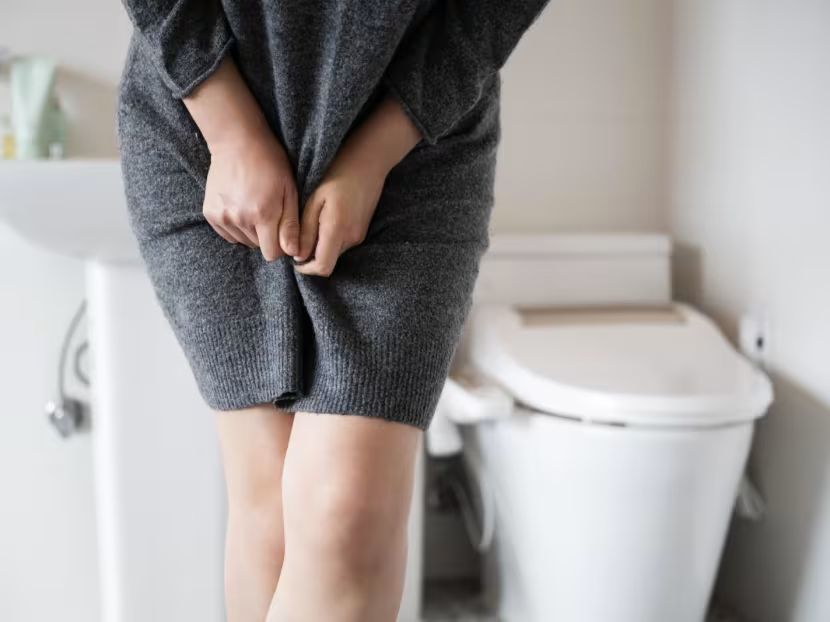
Urine leakage when coughing, laughing, or exercising often links to weak or poorly coordinated pelvic floor muscles. Constipation and difficulty controlling bowel movements also relate to poor pelvic floor function. These issues are common, but they are not a normal part of ageing. - Pregnancy, childbirth, and recovery
Pregnancy places prolonged load on the pelvic floor. Vaginal delivery further stretches these muscles. Without proper retraining, weakness persists long after childbirth. This increases risk of prolapse, leakage, and back pain later in life. - Menopause and hormonal changes
Estrogen levels drop during menopause. This affects muscle tissue quality, including the pelvic floor. Reduced support increases risk of prolapse, urgency, and discomfort. Strength training for these muscles becomes more important with age, not less. - Core strength and posture
The pelvic floor forms the base of your core. Weakness leads to poor trunk stability, back pain, and inefficient movement. Many women train abs and glutes while ignoring the foundation. This limits results and increases injury risk. - Sexual health and confidence
Pelvic floor muscles contribute to arousal, sensation, and orgasm. Poor muscle tone links to discomfort and reduced sexual satisfaction. Strength and control improve awareness, confidence, and comfort.
Common signs you should not ignore
• Urine leakage during daily activities or exercise
• Heaviness or pressure in the pelvic area
• Lower back or hip pain with no clear cause
• Difficulty activating your core
• Pain or reduced sensation during intimacy
These signs signal dysfunction, not weakness of character or ageing.
Pelvic floor training is not just Kegels
Many women try random squeezes without guidance. This often fails. Some women already hold too much tension and need relaxation before strengthening. Others struggle with timing and coordination.
Effective pelvic floor training involves
• Learning proper activation and relaxation
• Integrating breathing patterns
• Coordinating with core and hip muscles
• Progressing load safely through strength training
A trained professional like a personal trainer helps assess and guide this process.
Strength training supports pelvic floor health
Progressive resistance training improves muscle quality across the body, including the pelvic floor. Squats, deadlifts, carries, and controlled core work train these muscles when done with proper technique and breathing. Avoiding strength training due to fear of leakage often worsens the problem over time.
What you should do next
• Stop ignoring symptoms
• Get assessed by a qualified professional
• Train your pelvic floor as part of a full-body program
• Strengthen early, not after problems escalate
Pelvic floor health supports movement, confidence, and long-term quality of life. Paying attention now prevents bigger problems later.
References
https://www.ncbi.nlm.nih.gov/pmc/articles/PMC5440510/
https://www.ncbi.nlm.nih.gov/pmc/articles/PMC3941434/
https://www.ncbi.nlm.nih.gov/pmc/articles/PMC5585312/
https://www.ncbi.nlm.nih.gov/pmc/articles/PMC6356271/